Explainable routing
Records selected, skipped, fallback, budget, and compatibility evidence so every model choice is traceable.
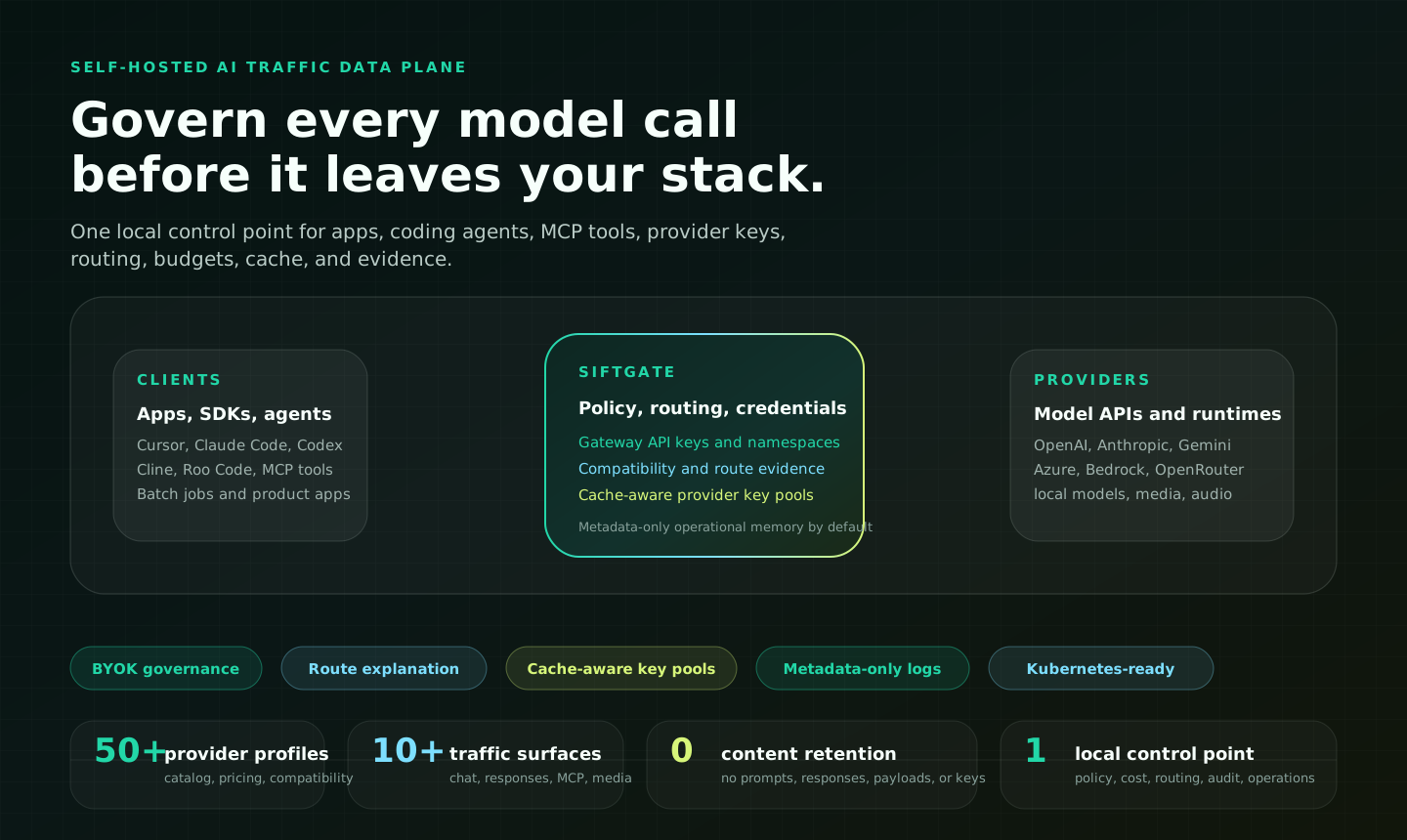
A self-hosted AI gateway for apps, coding agents, MCP tools, provider keys, routing, budgets, cache, and evidence.
SiftGate is an MIT open-source data plane. It keeps provider keys, gateway keys, routing policy, budgets, cache, audit, and dashboard evidence inside your infrastructure, with metadata-only operations by default.

SiftGate puts model routing, provider credential pools, agent profiles, MCP, budgets, and dashboard evidence into one self-hosted runtime.
Records selected, skipped, fallback, budget, and compatibility evidence so every model choice is traceable.
Clients use Gateway API keys while upstream provider keys stay in SiftGate nodes, env vars, or secret references.
Gives Codex, Claude Code, Cursor, Cline, Roo Code, Continue, and similar tools one governed ingress.
Proxies MCP tool traffic behind Gateway API keys, namespace allow-lists, and rate limits.
Tracks tokens, estimated cost, provider-cache savings, budget scopes, and chargeback metadata.
Does not store prompts, responses, raw headers, provider keys, tool payloads, media, source code, or diffs by default.
Clients never touch upstream provider keys directly. SiftGate applies gateway keys, policy, budget, compatibility, routing, and credential-pool decisions before forwarding.
Gateway API keys, workspaces, teams, policy namespaces, endpoint/model/node limits, rate limits, and budgets.
Compatibility filters, tiered routing, fallback chains, circuit state, cache-aware cost, and route explanation.
Credential pools support least-in-flight, weighted round-robin, sticky affinity, cooldown, and retry failover.
Metadata-only call logs, route traces, provider health, cache savings, cost estimates, session timelines, and audit.
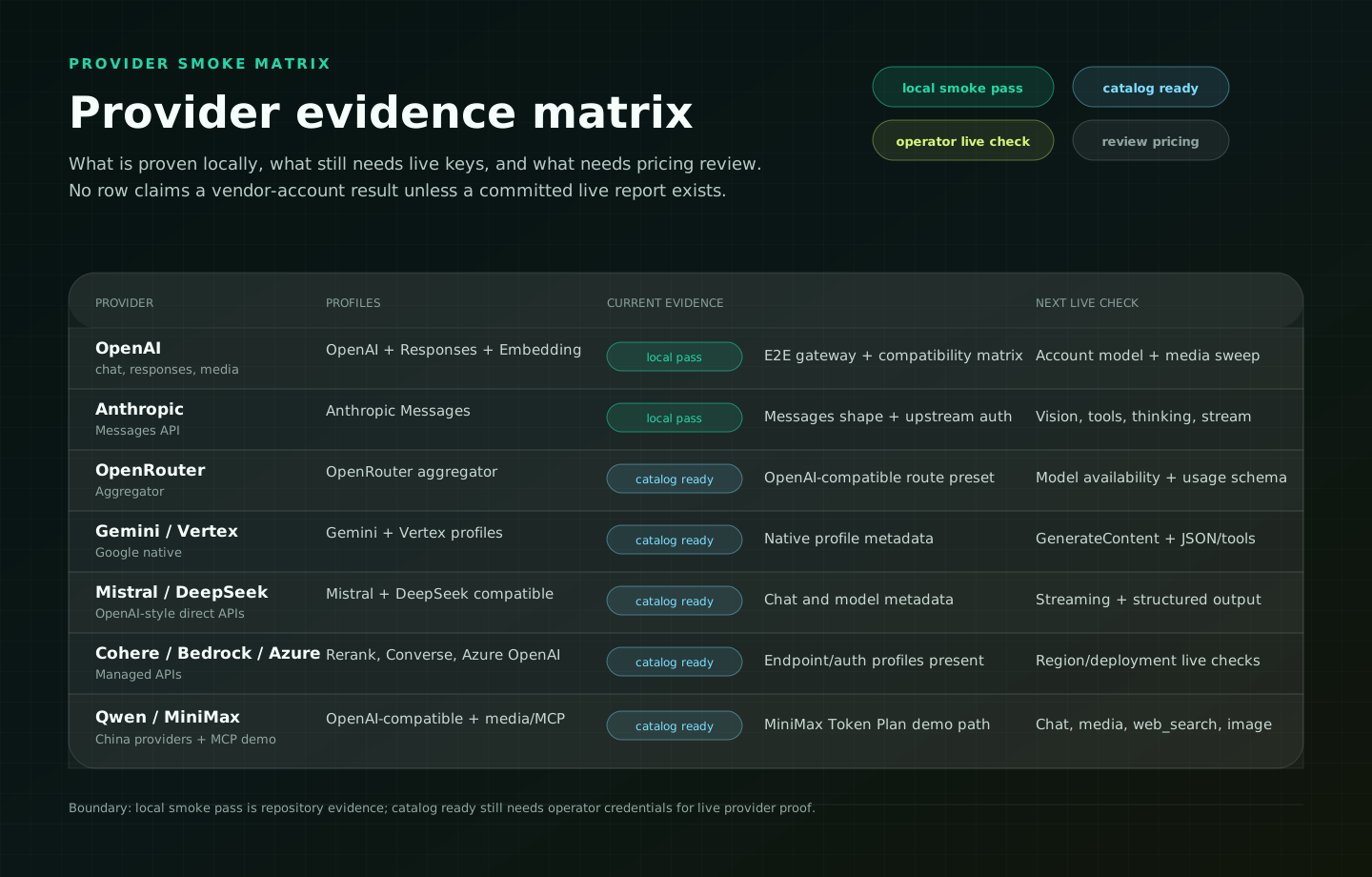
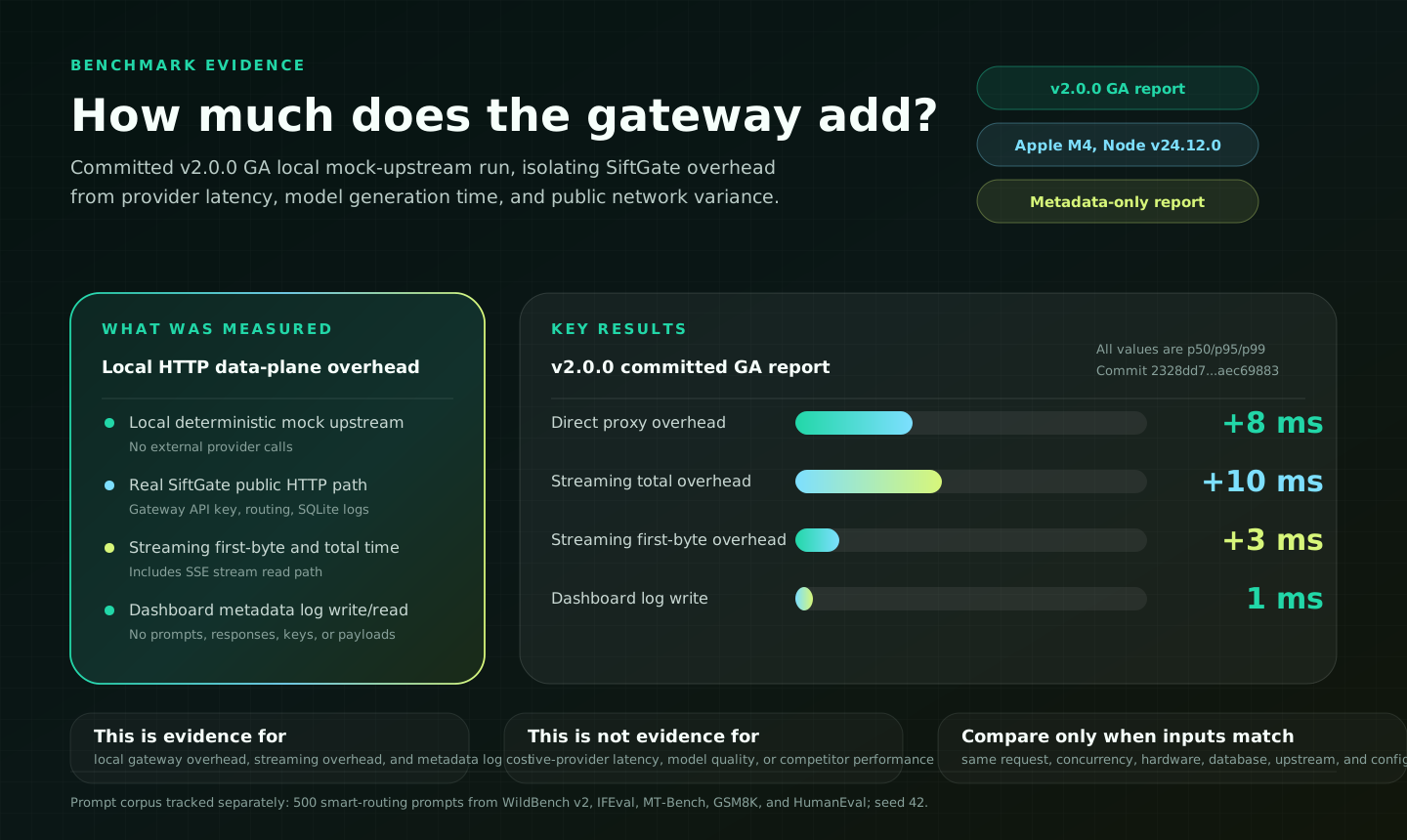
Provider smoke matrices, benchmark reports, and agent+MCP demos come from the OSS documentation assets for self-hosted evaluation.
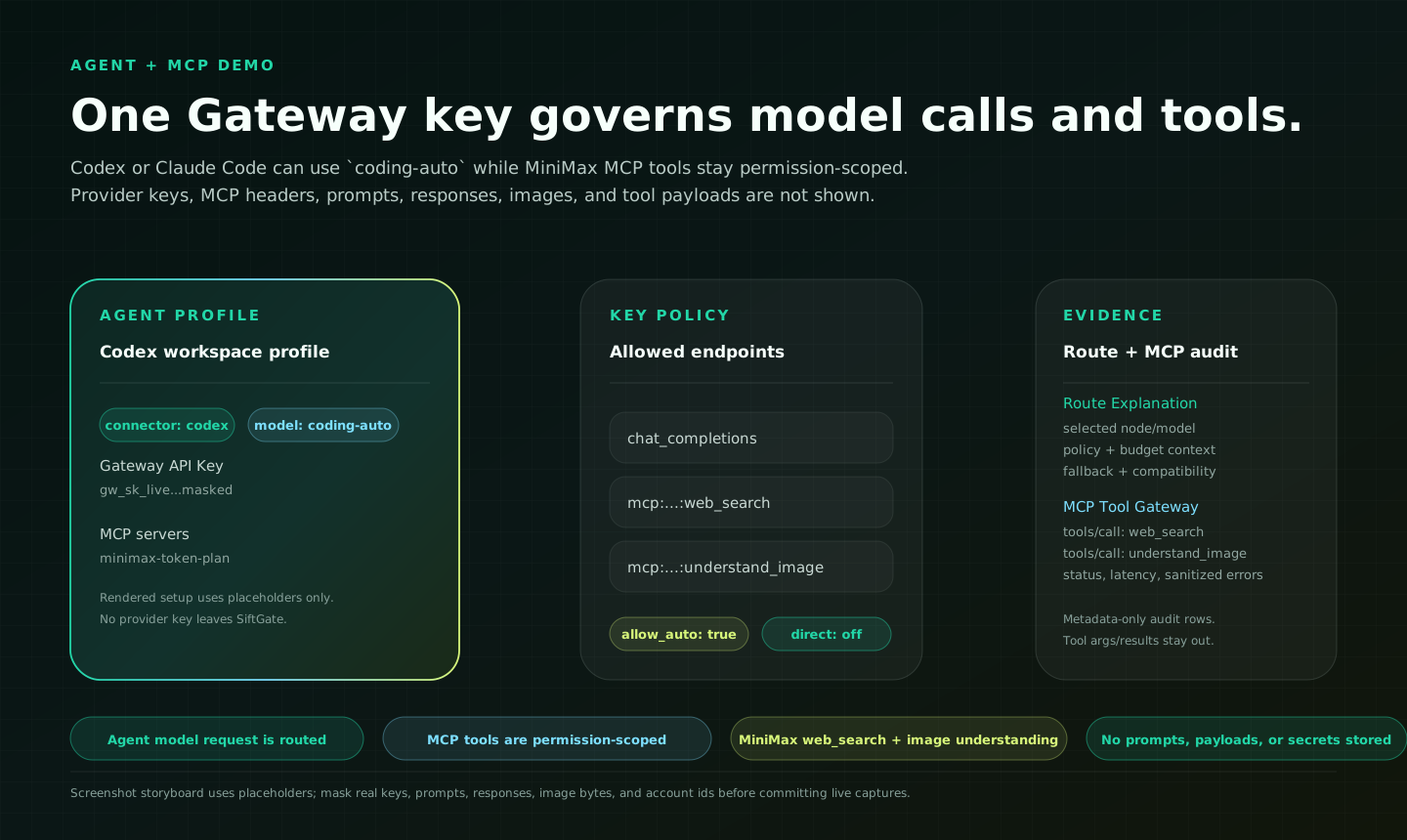
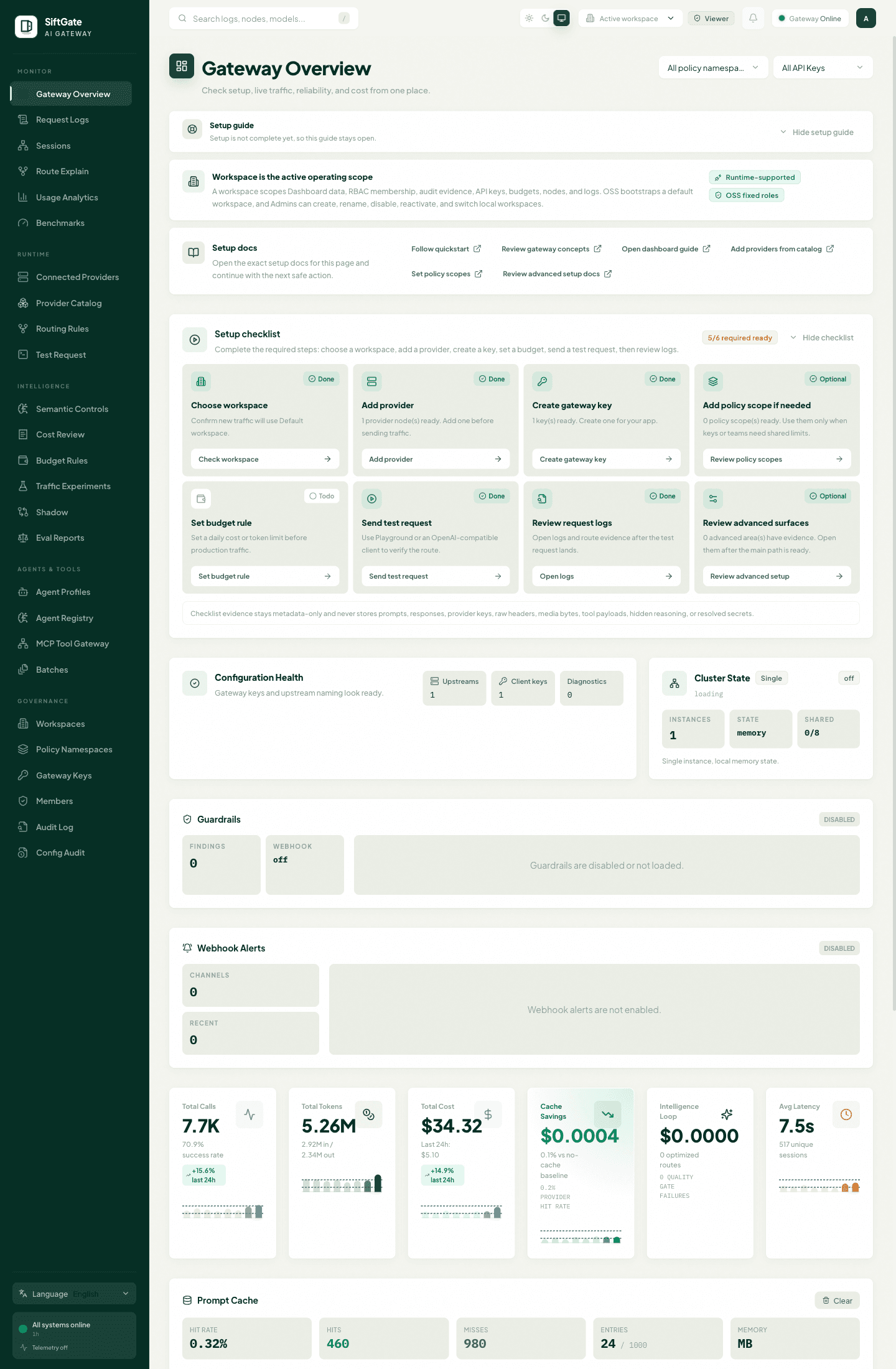
These captures are from the SiftGate open-source dashboard: local setup, configuration, observability, and cost evidence live in one operating surface.
From setup to health, guardrails, cost metrics, and cache hits, one screen shows the open-source data plane in motion.
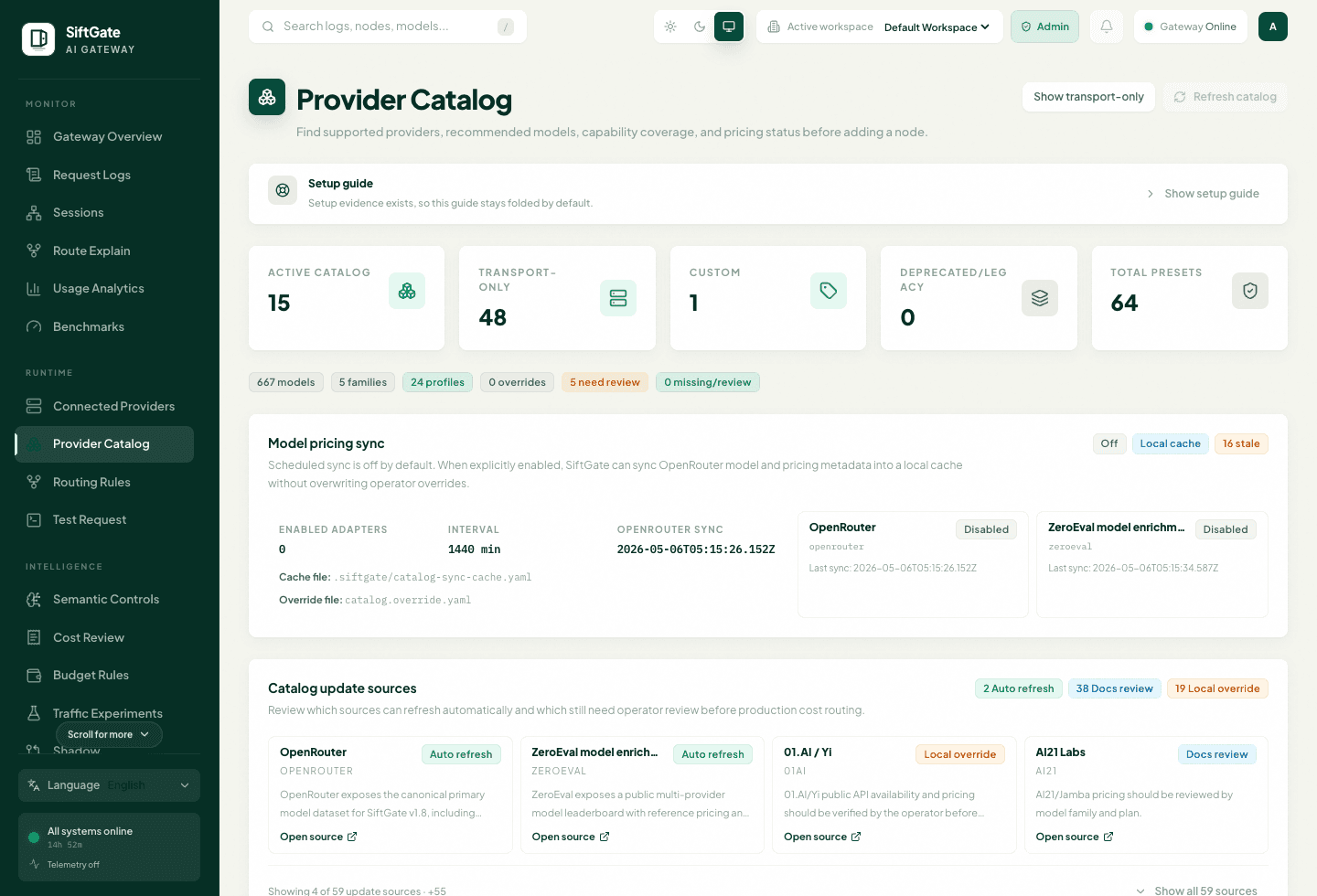
Maintains provider metadata, pricing sources, active profiles, and custom providers so node setup is evidence-backed.
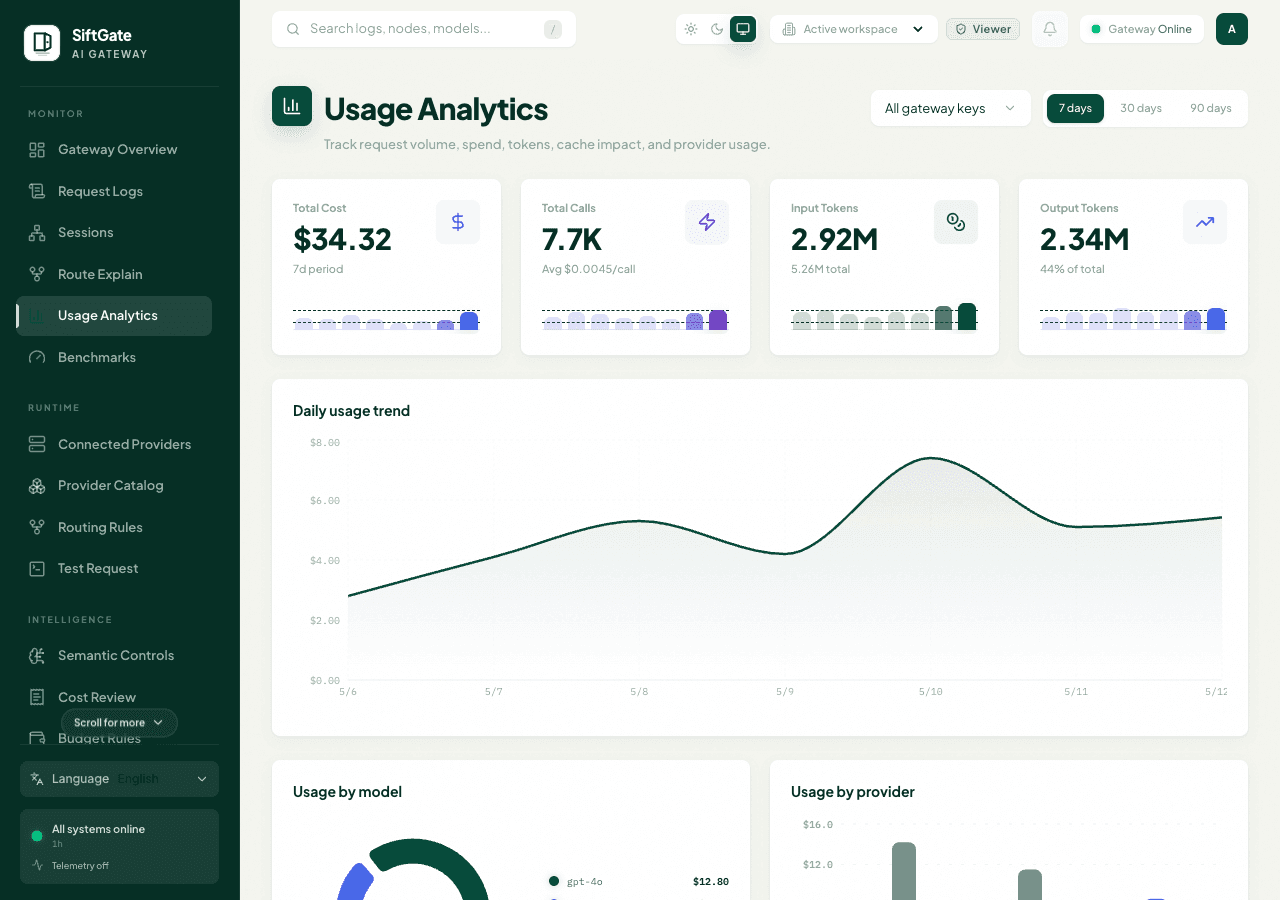
Tracks calls, tokens, spend, cache impact, and provider usage, turning AI traffic into operational data.